
Settlement on the coast
Spanish colonial authorities establish a permanent settlement on the coast east of Havana — fishermen, sailors and enslaved Africans — and it quickly becomes a working maritime outpost.
HIS TRAJECTORY
The sea begins as scenery, becomes a border, and then follows him from country to country.
BOOK ONE · 1994
He had not stayed long enough to see what his leaving had cost her.
Beyond the Claro de Luna, beyond the Torreón that had stood at the river’s mouth since 1649, the Florida Strait was beginning to fill with rafts — homemade vessels lashed together from inner tubes and scrap wood, launched from these very beaches in the long dark hours, pointing themselves north toward Florida and praying. By August the launches would become an exodus the world would call the balsero crisis.
He had said it to her once, across a candle: one day he would cross that sea. Whatever the boat was pointed at — America, freedom, the unchained life he had described to her — what he was actually doing, that night, was turning his back on the single person who had reached past his shell, and rowing out into the black water on purpose. He had not stayed long enough to see what his leaving had cost her. That, he left on the shore.
Doubt crept in like a rising tide. Were they drifting off course? Would the water and the little food they carried betray them before they reached anything? Was the freedom they had imagined only a glimmer on the surface — an illusion that would dissolve the moment they reached for it? Every wave carried the unspoken questions; every heartbeat measured how thin the line was between surviving this and not.
What the sea did with him belongs to the book.
For three decades, leaving Cuba without permission had been a crime, and the coast was watched. Then, in August 1994, after a rare public protest on the Havana seawall, the government announced it would no longer stop those who wanted to go. In about five weeks, an estimated 30,000 to 35,000 people took to the water on homemade rafts. The United States began intercepting them at sea; many were held for months at the U.S. naval base at Guantánamo, and an unknown number never arrived at all. Migration agreements between the two countries followed in September 1994 and May 1995.
Historical sources: U.S. State Department migration chronology and the September 1994 communique. Figures as reported by these and other public sources. The Cancer Man’s own crossing is part of the novella’s fictionalized account.
THE VILLAGE · COMPANION HISTORY
Cojímar is more than a setting. This is the ground beneath the novella, kept here so the story can stay lean.
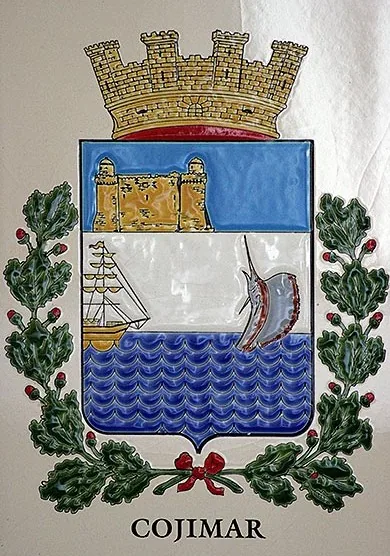
Cojímar is a fishing community on Cuba’s northern coast, east of central Havana, where the river meets the sea. Limestone shelves, small coves, the old Torreón and the memory of Hemingway make it one of the most recognizable small coastal places in the series.
Spanish colonial authorities establish a permanent settlement on the coast east of Havana — fishermen, sailors and enslaved Africans — and it quickly becomes a working maritime outpost.
The stone watchtower at the river mouth is completed as part of Havana’s coastal defenses. In the series, it becomes one of Cancer Man’s fixed points.
Mineral springs and bathing facilities help turn Cojímar into a resort destination for Havana families. Devotion to the Virgen del Carmen, patroness of seafarers, becomes part of the town’s maritime identity.
The village begins its yearly celebration of the Virgen del Carmen, a tradition kept to this day. Its first census records 1,613 people.
The Hotel Campoamor opens during Cojímar’s resort era. Contemporary and later sources place its opening in March 1907; the building later becomes the Preventorio Martí.
A new highway makes the rest of Havana easy to reach and pulls the traffic away; as Varadero rises, Cojímar’s resort years quietly close.
Six men in a small skiff land a great white shark off the village after a long fight — “the Monster.” For decades it was reported at 21 feet and some 7,000 pounds; later study of the one surviving photograph put it closer to 16. It never entered the record books, but in a village of fishermen the legend never left.
Ernest Hemingway kept the Pilar at Cojímar and frequented La Terraza. After his death, a memorial bust was created in the village facing the sea.
The resort years are over and the village is folded into greater Havana — but it stays a place people come to see, above all for the fishermen, the Torreón and the memory of Hemingway.
A GROWING VILLAGE
Population figures as reported by census records.
BOOK ONE · THE VILLAGE
Six places the story passes through, from the edge of the village to the mouth of the river. The book names the village, never the doorstep.
Where he put to sea
Just west of the Claro de Luna, the seawall gives way to open coast. In the desperate summer of 1994, with the power dead and rafts going out by the dozen, he pushed off from here — for the one thing the island could no longer give him: to be free.
The western edge
The last lights at the western end of the Malecón, where, he says, the moon turns the sea to beaten silver. He measured his leaving from here; the water just beyond it carried him out.
The seafront
The seawall runs the edge of the village, from the Torreón west to the Claro de Luna. In the blackout summer the street lived out here in the dark, on porches above the water. Somewhere along it, one conversation across a railing began everything — he will not say which house.
Monument · 1649
The squat Spanish watchtower guarding the mouth of the river since the seventeenth century — the first thing a returning fisherman sees on the horizon, and the last thing a leaving one watches sink behind him.
Monument
Beside the Torreón, on land: a bronze likeness of Hemingway, cast from boat fittings the fishermen of Cojímar gave after his death, set in a small pergola facing the sea.
The village
The old restaurant on the bay, its windows looking straight out over the mouth of the river. Hemingway ate here; the walls still hold photographs of him and of Gregorio Fuentes, the fisherman widely held to have inspired The Old Man and the Sea.
IN PICTURES
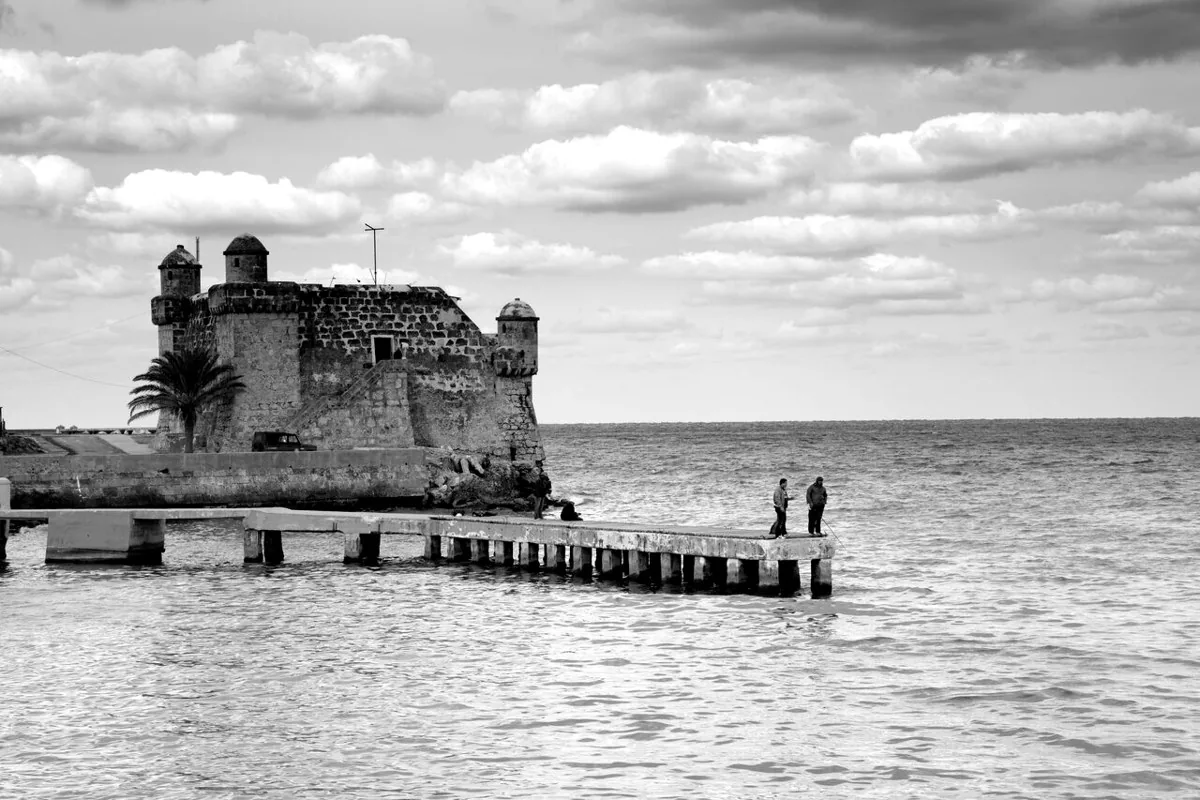
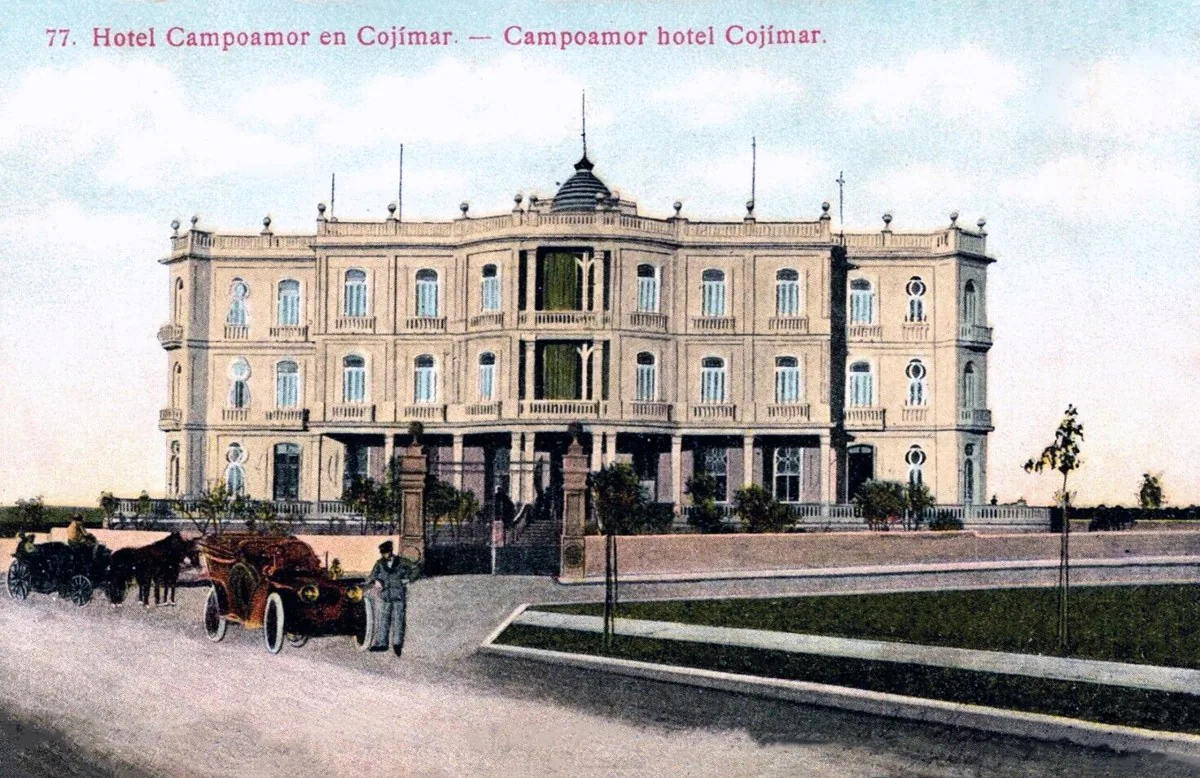
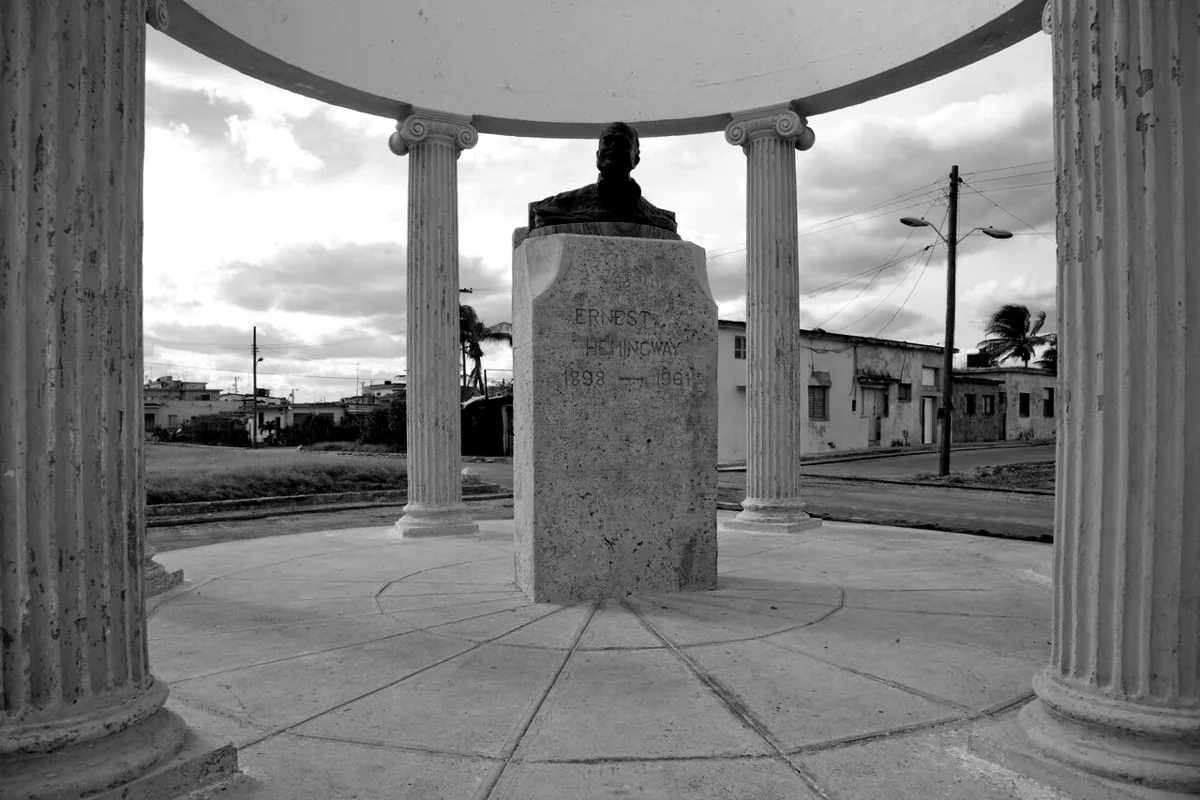
Image credits appear under each picture. Historical dates are presented as reported by the sources; where scholarship and popular retelling differ, this page does not pretend the record is cleaner than it is.
THE ROAD WIDENS
Blackouts, coral, a fortress, La Costa, the shore that becomes the measure of every later coast.
The porch where Ernest listens, and where old crossings are finally turned into sentences.
Book Three opens the Triskele, the family record, the Atlantic on another shore, and a road Cancer Man cannot walk unchanged.
A café, a leather notebook, Sabela DeRego, and the encounter that sends Ernest across the ocean.