The Protagonist
The Cancer Man
Water · the Crab · the narrator
No face. No name.
He was born in Cojímar, the fishing village east of Havana, on the fifteenth of July — the very day, three centuries earlier, the old watchtower was raised and the town with it. His mother, who read the stars, noted the hour exactly; she named him after the American who once fished those same waters.
He is a water sign, ruled by the moon: he feels everything and shows nothing. As a boy he was pushed toward the fencing strip and quit; he preferred chess, old books, the company of elders, and an American electronics manual a neighbour pressed into his hands. An old soul, already learning to guard the center of himself behind a shell.
He grew into a man of the classic kind — proper suits, a correct table, silences longer than his sentences. And when the island closed around him, he did what the desperate do: he put to sea. He would cross open water more than once in his life, always for the same thing.
Every woman he has loved becomes a chapter, and the whole series is his confession, set down at last. Through all of it he keeps the rule that has kept him alive: no real names, no face, no photograph. You will come to know him completely — and never see him at all.
I feel, therefore I am.
A pause, before Cojímar
The Crab's Shell
The ancient Greeks were not only mapping stars; they were searching for a language to explain the chaos of being human — patterns in the sky that mirrored patterns in the heart. You need not believe in astrology. But to understand the man on that porch, you have to understand what shaped him long before anyone came looking.
He was born in the second week of July, under the rule of the Moon. His real name stays off these pages, for the sake of those still living in his wake — here he is simply the Cancer Man, and the woman who starts it all, the Gemini Woman. I will bend that rule once, and only for a first name, because of a coincidence I could not have invented: his father, in his Hemingway devotion, christened the boy Ernest — the same name I was given, the same name on the spine of this book. Two Ernests: one who lived it, and one who would spend his life writing it down.
Cancer is the fourth sign — Water, ruled by the house of home and roots, of the things we carry without knowing we carry them. The Crab moves sideways. He approaches what he wants obliquely, never head-on, because to him vulnerability is weakness — the surest road to a painful and well-earned ruin; his shell is not arrogance but armour against a world he feels too completely. A contradiction in a linen shirt — open-minded yet fiercely traditional, a gentleman who can turn cold without warning. He would cross an ocean and rewrite his own history just to prove he was always the man who would. His principle is not I think — it is I feel, therefore I am.
In 1899 the naturalist Richard Hinckley Allen called Cancer the most subtle and least noticeable sign in the heavens. The irony holds: the sign that goes unnoticed is the one that carries the most in private. The Cancer Man is rarely the most visible person in a room — only, always, the one who feels it most completely.
“It was the universe that led me here. I never imagined I'd end up living a life like this.”
On the porch · Islamorada
His Chart · an astrological reading
Born under the Crab
15 July 1973 · 1:00 AM · Cojímar, Cuba
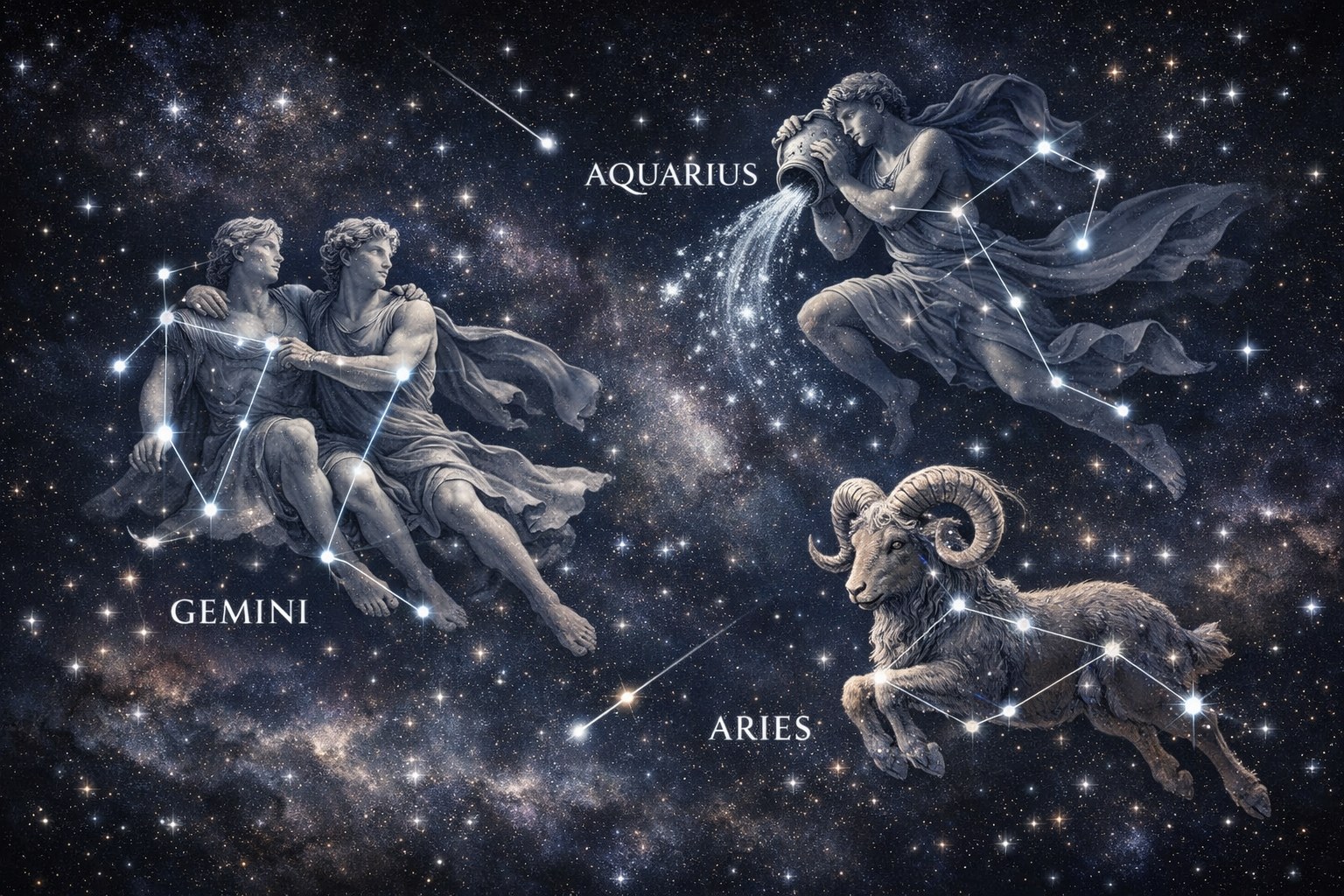
Tropical signs, with the true constellation behind each light. A reading, not a prophecy.
Sun
Cancer
behind · Gemini
A heart that feels everything, wrapped in restless, mercurial starlight — he keeps memory like a sacred artifact.
Moon
Pisces
behind · Aquarius
A dreamer with an Aquarian cool — intuitive, almost psychic, able to read a room without entering it.
Rising
Taurus
behind · Aries
A calm Taurus surface over an Aries fire — the quiet storm: still on the outside, volcanic within.
The Planets
Mercury in Leo · behind Cancer
A voice that wants to shine but thinks like a protector — he speaks in symbols.
Venus in Gemini · behind Taurus
Charm, wit and curiosity over a sensual undertone — a lover of beauty and clever talk.
Mars in Taurus · behind Aries
A slow-burning fire with a hidden fuse — patient, until he isn't.
Jupiter in Aquarius · behind Capricorn
A visionary mind on a disciplined backbone — innovation grounded in realism.
Saturn in Cancer · behind Gemini
Emotional responsibility; he learned early to hold himself together.
Uranus in Libra · behind Virgo
Rebellion through refinement — precision used as a weapon.
Neptune in Sagittarius · behind Scorpio
A dreamer with a dark edge — mysticism laced with intensity.
Pluto in Libra · behind Virgo
Transformation through relationships, carried out with surgical care.
The Houses
I · Self
Taurus
Grounded, sensual, magnetic.
II · Values
Gemini
Collects ideas like currency.
III · Mind
Cancer
Memory-driven; emotional intelligence.
IV · Roots
Leo
A proud, dramatic lineage.
V · Creativity
Virgo
Art through precision and craft.
VI · Work
Libra
Harmony and aesthetic routine.
VII · Relationships
Scorpio
Intense, transformative bonds.
VIII · Depth
Sagittarius
A philosophy of death and rebirth.
IX · Belief
Capricorn
A structured, disciplined worldview.
X · Career
Aquarius
A public identity tied to originality.
XI · Community
Pisces
Spiritual, artistic circles.
XII · Unconscious
Aries
Hidden fire; a secret inner warrior.
The Aspects
Sun trine Moon
Inner harmony — heart and mind reconciled.
Moon square Mars
Emotional storms — deep feeling held behind a hard edge.
Mercury conjunct Sun
Identity fused with intellect — the born storyteller.
Venus sextile Mars
Magnetic charm — attraction comes easily.
Saturn opposite Venus
Love lessons — beauty touched by melancholy.
Pluto square Moon
Psychological rebirths — a life of deep transformation.
Chart shape
Locomotive
A driving force, propelled by a mission he can't yet name.
Element
Water
Emotion, intuition, memory, symbol.
Modality
Cardinal
An initiator — he sets cycles in motion.
Ruler
Venus
Earthy, sensual, artistic — and stubborn, through Taurus rising.
A soul born under a sky split between depth and fire — a Cancer Sun lit by Gemini’s constellation, a heart that feels too much wrapped in a mind that never stops moving.
He carries memory like a weapon, speaks in symbols, loves with curiosity and fights with patience — shaped by emotional storms, reborn through psychological fire, destined to build something beautiful from the ruins.
His Grandmother's Gift
The Triskele
He has carried it since the day she pressed it into his palm. He was sixteen. He has not fully let go since.
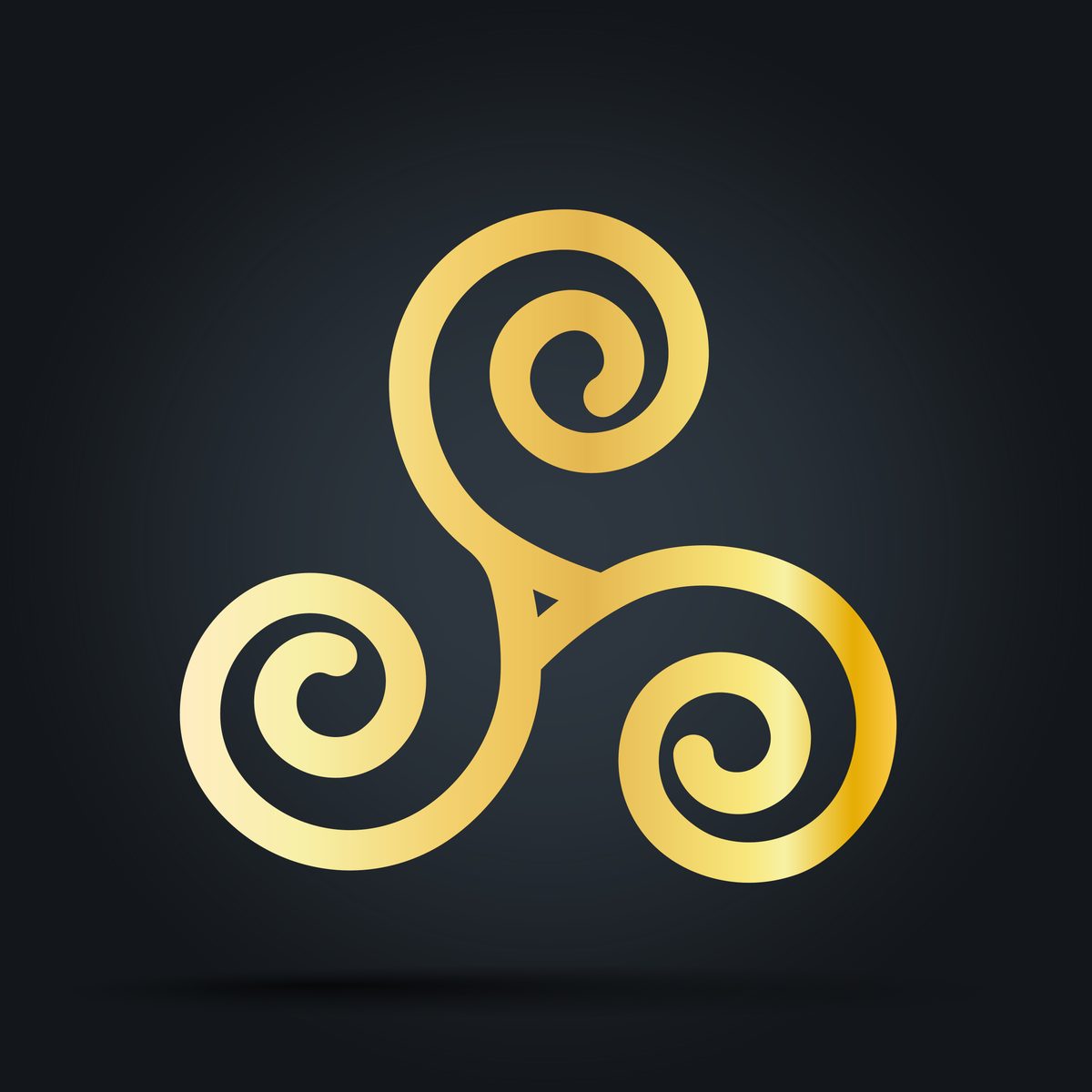
The Gift
She was the keeper of things. Not the family's money — there was rarely enough of that — but its oldest objects: the things that survived the hurricane of 1944, the bureaucratic erasure of the revolution, the slow attrition of years. Among them, the oldest: a Triskele in dark silver, passed to her from her own mother — his great-grandmother — who had come by ship from Galicia, in the northwest of Spain, to Havana in the early years of the last century. The great-grandmother died in Havana decades later, buried in Colón Cemetery, still carrying something of that Atlantic coast in everything she had touched.
He was sixteen in 1990 when his grandmother prepared to leave Cuba — to join the family members who had already emigrated to the United States. Before she left, she pressed the Triskele into his palm without explanation. She said one thing, which he has never repeated to anyone. He closed his hand around it, and has not fully let go since. It is dark silver, three spirals interwoven, on a chain so worn the links had thinned over a century of being held — his great-grandmother's hands, then his grandmother's, then his.
He would not see his grandmother again for thirty years. He carried the Triskele through everything that followed: the blackouts, the Gemini Woman, the raft across the Florida Strait in August 1994. He kept it wrapped in cloth against his chest on that water. He did not pray on that crossing — he is not a man who prays. But he held it. Not as a man who believes in objects, but as a man who does not put down something that belongs to someone he will never see again.
Then, years after the crossing — in the slow year after the Gemini Woman's chapter closed — it began to feel heavier. He started taking it out of the drawer where he sometimes left it, keeping it on his person, finding his hand reaching for it without reason. Something in it was asking him a question. Three months after he first noticed this, he was on a plane — unplanned, unsaved-for, it simply appeared. He has not returned to Cuba since. Where he went is the next book.
Before Him · Before Any of Them
Five Thousand Years of Three Spirals
Among the oldest marks left by human hands on this planet: a triple spiral, carved into the entrance stone at Newgrange, County Meath, Ireland, around 3200 BC — older than Stonehenge, older than the Great Pyramids of Egypt, older than any written language we have fully decoded. The passage grave was built in such precise alignment with the winter solstice that, once a year, on the shortest day, the rising sun sends a beam of light sixty metres down the stone corridor and, for seventeen minutes, illuminates that triple spiral at the chamber's heart. The dead, the living, and the returning light — held in three turning lines. Something that old is not decoration. It is an answer.
The word comes from the Greek τρισκέλης — three-limbed, three-legged. The symbol appears across civilisations that had no contact with one another, which is the first thing to understand about it: it was not borrowed, it was arrived at, independently, by people separated by oceans and millennia. The Mycenaean Greeks pressed it into bronze ornaments; the Etruscans carved it into pottery; the Lycians stamped it onto coins; the Celtic tribes of Gaul and Britain wore it on shields going into battle. It is the emblem of Sicily — the Trinacria, three capes of an island thrust into the Mediterranean — and of the Isle of Man in the Irish Sea. The Book of Kells, illuminated by Irish monks in the ninth century, is woven through with triskele variations: spirals inside spirals, the symbol encoded in ink by men who inherited it from ancestors who had carved it in stone two thousand years before them.
Every people who drew it named it differently, but the meanings converge without instruction. Three realms: land, sea, and sky — the full inhabitable world. Three states of time: past, present, and future — the river of existence, inseparable. Three stages of life: birth, death, and what comes after death, which the Celts did not call an ending. Three movements of the sun across a single day: rising, zenith, and setting — the engine that does not stop. To the Norse, the three arms were the three roots of Yggdrasil, the world-tree, drawing simultaneously from three wells: wisdom, fate, and the underworld. To the Pythagoreans, three was the first perfect number — the first with a beginning, a middle, and an end. To the Celts, who left behind no written doctrine but only motion, the triskele was not a symbol of three separate things. It was a depiction of one thing in three phases: the universe, turning.
The spirals move. That is the essential fact. Unlike the cross, the circle, or the square, the triskele does not hold still. It turns. Each arm begins at the centre and spirals outward in the same direction, so that the whole figure appears to be in perpetual rotation — the ancient Irish called this dynamic principle the gealach, the lunar quality of perpetual becoming. Nothing in the symbol reaches a final point. Nothing returns to the centre. Every arm is always in the middle of its passage.
In the coastal traditions of the North Atlantic — in the fishing villages of Brittany, Cornwall, and the west of Ireland — the triskele was read as three waves: the wave below the visible surface (the unseen world), the wave at the surface (the world we inhabit), and the wave above (what is arriving). A mariner's cosmology, pressed into metal and worn at the throat. The sea as teacher. The sea as the one thing that cannot be owned, controlled, or deceived. The triskele was not a prayer to calm the water. It was an acknowledgement that the water moves — and so must you.
The Three Realms
Land · the rooted world
Sea · the boundary world
Sky · the reaching world
The Three Times
Past · what was carried
Present · what is held
Future · what is turning
The Three Lives
Birth · the first spiral
Death · the second spiral
Return · the third
The Cancer Man & the Symbol
Why He Carries It
He is a water sign — Cancer, ruled by the moon, born in a fishing village on the northern coast of Cuba. The sea was never a metaphor to him. It was the view from his door, the sound at the edge of every night, the thing he crossed when he had no other choice. He carries the symbol of the three waves because it was pressed into his hand by a woman whose own mother had crossed an ocean before him — one shore left behind, another arrived at, a century before his own crossing. Blood carries its own logic. The Triskele carried it forward.
His grandmother was not a superstitious woman. She did not press the Triskele on him as a charm against bad luck. She pressed it on him — at sixteen, four years before the raft, with a life of motion still ahead of him — because she understood his nature better than he understood it himself: the turning, the inability to hold still, the pattern that would define every decade of his life. She gave him a symbol of motion because she knew he would never stop moving. She gave him the three spirals because she knew — though she could not have said how — that his life would turn three times.
He has crossed open water more than once. He has left more than one country. He has loved women across every sign of the zodiac, and each one left a mark he chose to keep. The series — these twelve chapters — is itself a triple structure: a past told in the present, reaching toward something he will not name until the final book. Three spirals. Three turns. One motion, begun at a centre that belongs to an afternoon in 1990 when a woman left him something she could not keep and he could not put down.
By the third book, the Triskele is no longer only his. Its meaning, held private for two volumes — a grandmother's gift, a dark-silver weight against his chest, a habit he cannot explain and will not surrender — opens. What it carries, and what it finally demands of him, is what Book Three is for. Readers who have lived with the history of this symbol will feel, when that moment arrives, that they always knew it was coming.
“She said one thing when she put it in my hand. I have spent thirty years deciding whether she was right.”
The Cancer Man · Islamorada
His Trajectory
The Crossing
One life, drawn across water and years. These are the places that made him — each a stop on a map still being charted.
Where it begins
Cojímar, Cuba
A fishing village east of Havana. Born by the sea — and in the summer of 1994, with the power dead twelve hours a night, undone by the woman next door.
The crossing
The Florida Strait
Open water on a raft built for none of it. He put to sea for the one thing the island could no longer give him: to be free.
Withheld
A place he will not name
Years later, an ocean away, a country he has never let me write down. Its chapter is still being written.
Where he tells it
Islamorada, Florida Keys
A stone house on the Atlantic, a replica of an old man's boat in the harbour. Here, at last, he confesses everything — on the condition that no one is ever named.