
Cojímar in blackout
Moonlit porches, salt air, scarcity and the particular intimacy created when an entire village loses electricity.
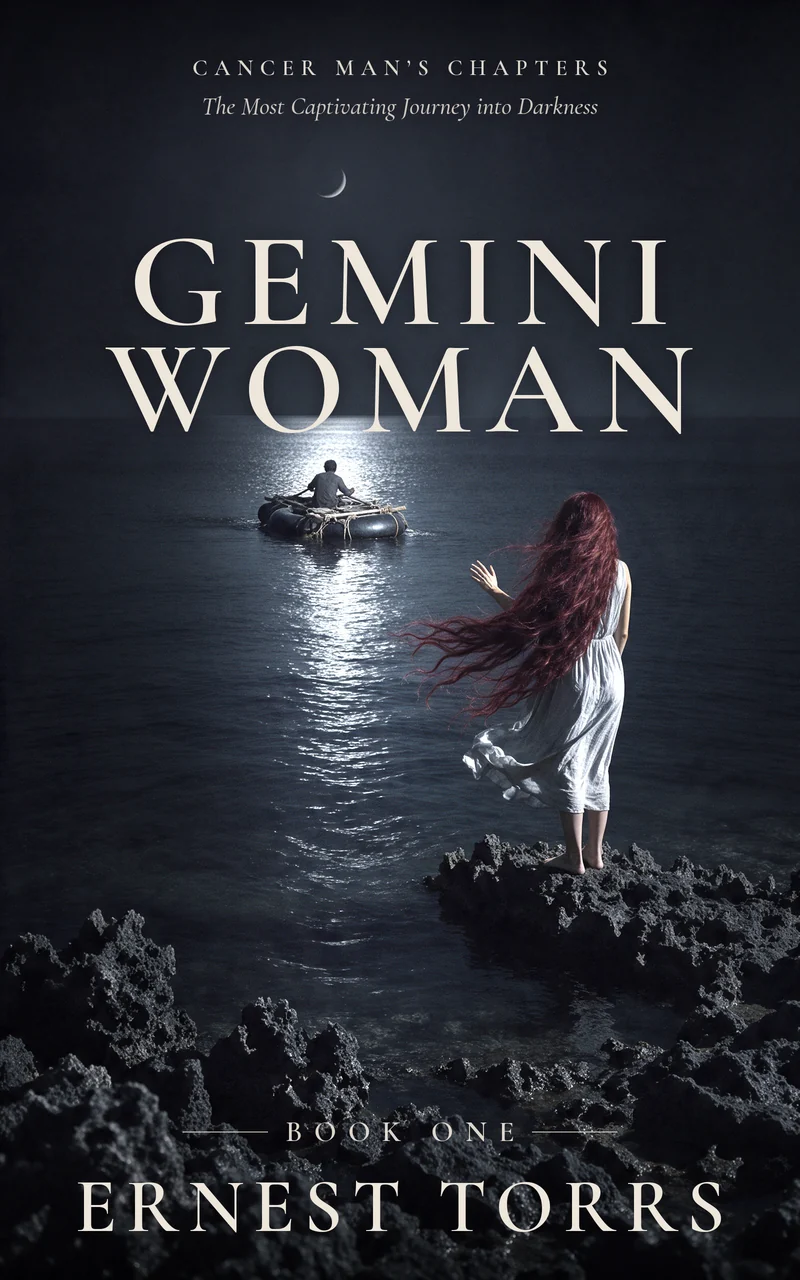
BOOK ONE · THE GENESIS · COJÍMAR, CUBA · 1994
A forbidden attraction in a blackout summer—and the first lesson Cancer Man will spend the rest of his life trying to understand.
A tale that will make you think about a lifetime’s lessons.
THE BOOK
In the summer of 1994, Cojímar loses power for hours at a time. The village moves outdoors. Under the moon, a nearly twenty-one-year-old man and the married woman next door begin talking across the darkness.
She is fourteen years older, a mother, and accustomed to being the person a room arranges itself around. He is young, observant, and trained to give almost nothing away. The fact that he does not pursue her becomes the very thing that pulls her closer.
Years later, Ernest Torrs receives a leather notebook in London and follows it to the Florida Keys, where Cancer Man finally begins to tell the story—without asking to be forgiven.
WHERE IT IS TOLD
The novella begins in London and is confessed in the Florida Keys—but Cojímar is the current underneath every page.
Ernest Torrs follows a leather notebook from a London café to a porch above the Atlantic. There, Cancer Man agrees to speak on one condition: the people who lived the story will wear masks. Names, addresses and identifying details are changed; the emotional shape remains.
“Some truths are too dangerous to wear their real names.”
There is a quieter bridge, too: Hemingway’s Pilar once worked the waters off Cojímar, and a replica of the boat now rests in Islamorada — two shores of the same story.
Moonlit porches, salt air, scarcity and the particular intimacy created when an entire village loses electricity.
Cancer Man’s refusal to chase becomes both mystery and weapon long before he understands what it costs.
The affair harms people who are not abstractions. The novella keeps the husband, the son, the parents and the lovers inside the moral frame.
FROM THE OPENING
A short passage from Gemini Woman.
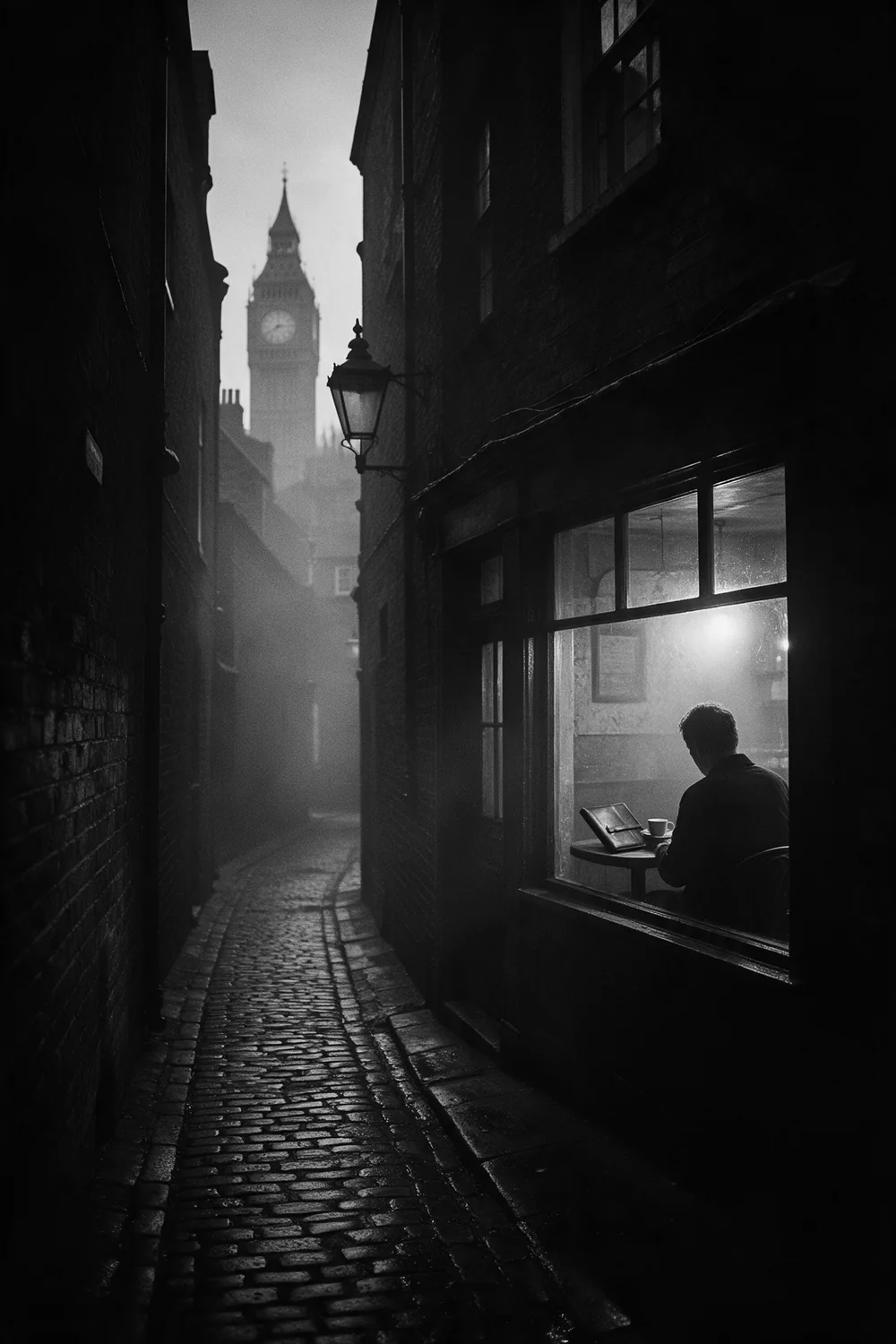
He looked at me a long moment. Whatever lived behind that look, I never learned.
We had been sitting for hours. The Atlantic beyond the shore had gone the color of slate. I had crossed an ocean and half a continent to reach this porch in the Florida Keys — on the word of a stranger I had met in a London coffee shop and would never see again.
And I still did not know the woman’s name.
He had not offered it. He offered almost nothing; that, I would learn, was what he feared most: disclosing the truth.
“You want to know about her,” he said. It was not a question.
“I want to know all of it,” I said.
The Cancer Man looked at the pen in my hand before he looked at me.
Three words on my first page led to the most captivating journey into darkness.
“The Gemini Woman,” he murmured.
To understand how I came to be on that porch — how a broke, divorced Englishman with dried-up ink ended up recording his confession — you have to go back with me to London, and to a woman.
My name is Ernest Torrs.
Three lives changed that stifling evening.
The city felt heavy that day, the damp chill going straight to the bone. I drifted through the streets like a man in a dream he had stopped trying to wake from. The clamor thinned; the cobblestones smelled faintly of old books and worn leather, and somewhere out of sight a street musician played something I couldn’t quite catch. The lane I had turned down opened onto a small coffee shop called Orbay’s — the kind of place where the clocks had loosened their hands.
A bell chimed as I pushed the door open. Inside, the air was warm and golden, thick with roasted beans and buttered pastries, mismatched mahogany furniture crowding the room. I found a corner seat, set down my bag, and felt some part of the weight I’d carried loosen for the first time in months.
And that was when I noticed her properly.
At the far end of the room, a woman sat reading — a dark coat against the unseasonable cold, her face half-shadowed under a wide hat. There was nothing especially mysterious about her at first glance: a tourist, it seemed, reading out of the weather. But something in her manner held me. She turned the pages without hurry.
I couldn’t stop looking. Our eyes met — hers an unusual green, the deep green of moss after rain. Her hair was a tarnished gold, loosely pulled back. She might have been thirty-five, she might have been forty; she had the quiet poise of a woman who had stopped expecting to be looked at without a reason.
She held my gaze longer than a stranger should — long enough that I knew she was inviting something neither of us could yet name. I am a careful man, not a bold one. But watching a woman who would not look away, I felt my caution give.
I stood up. I had no plan. I crossed the floor to her table.
“Mind if I join you?”
My voice came out too British, too stiff — the stilted delivery of a man in a period drama who has forgotten his lines.
She looked up, pushed the brim of her hat back just enough to see me clearly, and a slow smile tugged at one corner of her mouth.
“Please. Take a seat.”
She was American — a soft Southern lilt that turned a courtesy into an invitation. I sat. The notebook lay between us like a third presence: leather-bound, heavy, unnamed.
I asked what she was reading. “Some musings about a man I once knew,” she said, her fingers tracing the cover. “The most captivating journey into darkness. But that’s a tale for another time.” She tilted her head. “What brings you here?”
“A writer who’s lost his words. Then I stumbled into this place and, well… I noticed you.”
She did not smile. “And what does a writer want with a woman reading in a corner?”
“The truth? I don’t talk to strangers, and I certainly don’t approach mysterious women in cafés. But something about you felt less like an impulse than a command I had no choice but to follow.”
She laughed — a clean, unguarded sound — and looked at me a beat longer. Then she asked what I wanted to write.
“I want to write a firsthand odyssey,” I said, the idea taking shape as I spoke. “Built on experiences actually worth living. Hollywood fills people’s heads with fairy tales everyone wants and no one truly inhabits. I want mine to be different — bold, ugly, real. Pain, betrayal, jealousy. The sharp edges of an actual life. And at the end, a rebirth into something good.”
“You’d be surprised how few people want the pain and the ugly,” she said. “It costs more than they expect.”
“I’ve already paid. A divorce, a career, most of what I thought I was. I’d rather it bought me something worth writing.”
She told me a little: that she had come from Miami and had to leave it; that she was married; that she had known a man there — a Cuban-American, older than her, unlike anyone she’d met.
“He was the only still thing in the room,” she said. “Everyone else was performing. I asked what he was running from, and he asked me the same question back. No man had ever handed me the question before. They always wanted to tell me. He just… waited. I fell for him.”
“Where was he from?”
“Cojímar. A town in Cuba where time had stopped. When he said it, a door opened in his face onto a room he hadn’t entered in years. I asked him to tell me. He began — then stopped, said two words, and would not say another.”
“What two words?”
“A forbidden—” She stopped exactly where he had stopped. “That was all. I spent quite a while trying to learn how the sentence ended. That’s usually how he works.”
“How he works?” I said.
Her hand had drifted back to the cover. I watched her almost offer it — and then not. Whatever she was weighing, I had not tipped it.
“It’s late,” she said, and the shutter came down. She stood, gathering the book against her coat as though I might reach for it.
“You have me at a disadvantage,” I said. “I don’t even have your name.”
She looked at me a moment longer, deciding. “Sabela,” she said. “Sabela DeRego.” A gift, and a small one, and all she meant to give.
She was already at the door when she said the rest — half over her shoulder, almost to herself.
“We may see each other again.”
“What do you mean?” I said. “When?”
…
Continue in the book ↗